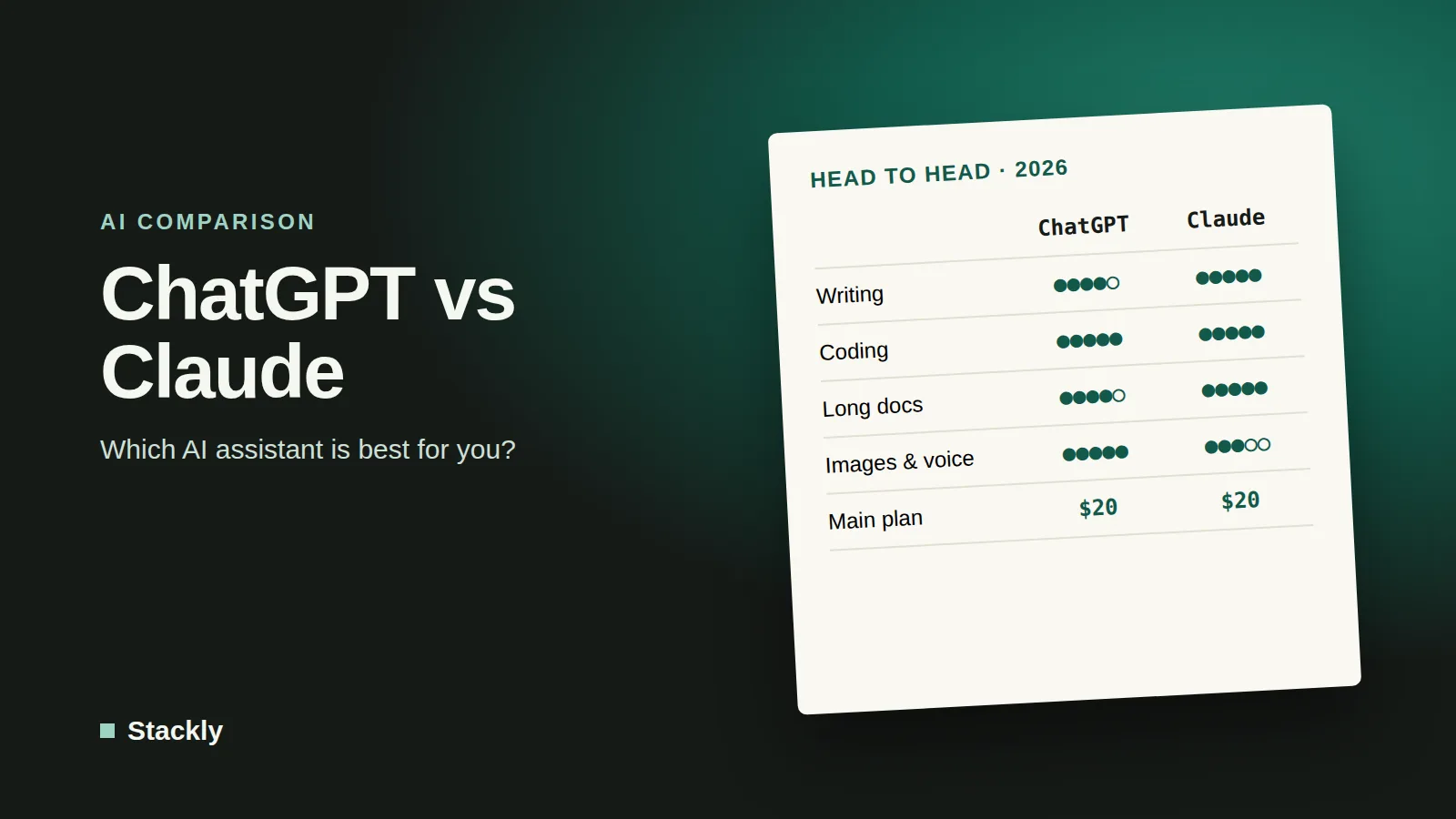
ChatGPT and Claude are the two AI assistants most professionals end up choosing between. Both can write, research, analyze documents, and code, both offer free plans, and both cost $20 per month for their most popular paid tier. So which one is actually better? The honest answer is that it depends on the work you do. This comparison looks at the latest models from OpenAI and Anthropic, how they perform for writing, coding, research, and everyday business tasks, what each costs, and which one is the better fit for different types of users.
This comparison reflects both products as of late September 2026. AI assistants change quickly, so check each provider’s pricing and model pages for the latest details.
Long documents, natural writing, coding, agentic work
Coding tool
Codex
Claude Code
The Models Compared
Both companies released major new models on the same day, September 22, 2026, so this is a close contest at the top.
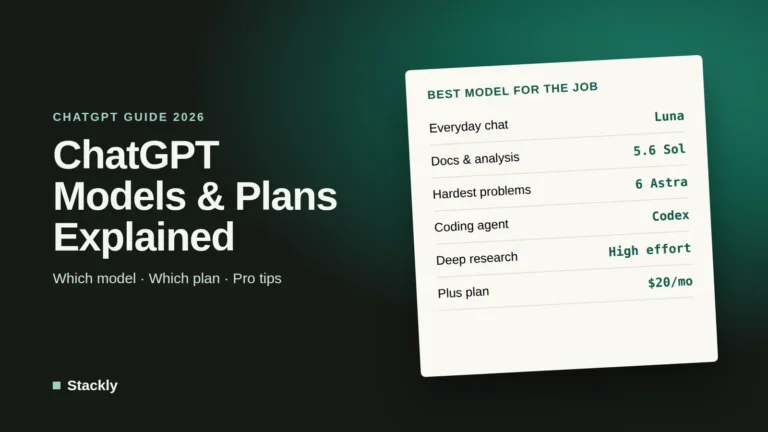
ChatGPT runs on OpenAI’s GPT-5.6 family, with Luna for fast everyday chat, Terra as a balanced option, and Sol as the flagship, plus the new GPT-6 Astra, which OpenAI calls its most intelligent model to date. OpenAI highlights Astra’s gains in computer use, coding, advanced math and science, and following document templates.
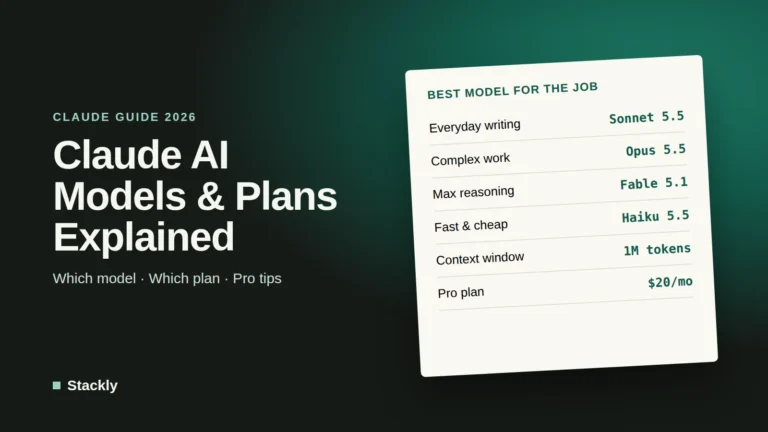
Claude runs on Anthropic’s current model lineup: Opus 5.5 as the recommended starting point for most work, Fable 5.1 for the most demanding reasoning, Sonnet 5.5 as the fast, balanced option, and Haiku 4.5 as the quickest and cheapest. Anthropic says Opus 5.5 matches or beats its larger Fable model on many benchmarks while being faster and less expensive, according to TechCrunch.
In practice, the top models from both companies are extremely capable, and for everyday business tasks the difference between them is smaller than the marketing suggests. The bigger differences lie in how each product works, what features surround the model, and the style of the answers.
Writing and Content Creation
This is where many users notice the clearest difference. Claude is widely praised for natural, well-structured writing that sounds less formulaic, follows style instructions closely, and handles long pieces consistently. Anthropic also says its latest Opus model uses less jargon and puts the most important information first, which suits business writing.
ChatGPT is an excellent all-round writer too, especially for short, punchy marketing copy, brainstorming many variations quickly, and adapting tone. Its custom GPTs make it easy to save a reusable “brand voice” assistant.
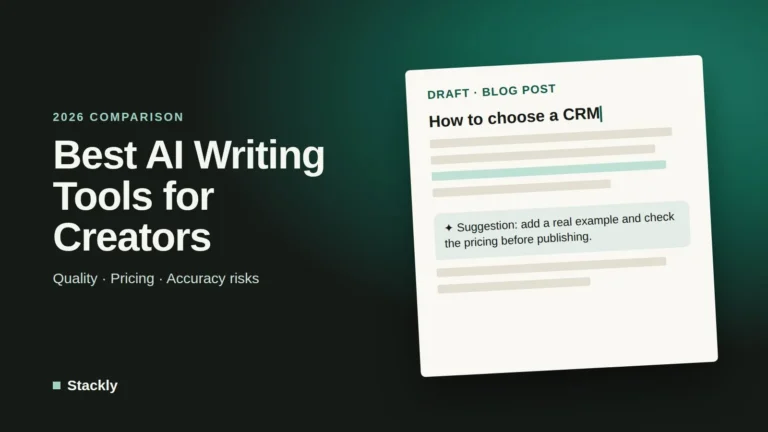
Verdict: Claude has a slight edge for long-form writing, reports, and content that needs to sound human. ChatGPT is just as good for quick copy and brainstorming. Our guide to the best AI writing tools compares both with specialist tools.
Coding and Technical Work
Both companies are competing hard for developers. OpenAI calls GPT-5.6 Sol and GPT-6 Astra its best coding models, and its Codex agent can write, test, and fix code with considerable autonomy. Anthropic positions Opus 5.5 for long-running agentic coding, and Claude Code, which works across entire projects from the terminal, desktop, or browser, has become one of the most widely used AI coding tools.
Verdict: A genuine tie at the top end. Developers tend to pick based on which agent tool fits their workflow, Codex or Claude Code. For small businesses fixing a WordPress site or writing simple scripts, either will do the job well.
Research and Analysis
ChatGPT offers web search with citations and a mature deep research mode that browses many sources and produces a structured, cited report. Claude offers web search and its own research mode, and its standout advantage is context size: Opus 5.5 and Sonnet 5.5 can work with up to one million tokens, which means entire contracts, long reports, and large sets of documents can be analyzed in a single conversation.
Verdict: ChatGPT’s deep research is excellent for exploring a topic from scratch across the web. Claude is stronger when the job is analyzing a large amount of material you already have, such as contracts, transcripts, or a folder of reports.
Features and Ecosystem
ChatGPT has the broader consumer feature set: built-in image generation and editing, a well-developed voice mode, custom GPTs that anyone can build and share, Projects, memory, and file analysis. It is also the most widely used assistant, so more third-party tools and tutorials are built around it.
Claude focuses on productivity and work: Projects with shared knowledge, artifacts for creating documents, web pages, and small interactive tools, integrations with apps such as email, calendars, and cloud storage, Claude Code, and Cowork for handling multi-step tasks more independently. Paid plans also include Anthropic’s newer tools for documents, slides, and design, as well as extensions for Chrome and Microsoft 365.
Verdict: ChatGPT wins for variety, especially if you want images and voice. Claude wins for structured work with documents, connected apps, and agent-style tasks.
Pricing Compared
Pricing is almost identical at the most popular levels. Both have free plans, both charge $20 per month for their main paid plan (Claude Pro drops to $17 per month when billed annually), both have power-user plans starting at $100 per month, and both offer team plans at roughly $20 to $25 per user.
The main differences:
ChatGPT also offers Go, a budget plan at about $8 per month in the US, which suits regular users who do not need advanced reasoning.
ChatGPT’s free plan includes unlimited everyday chats with a fast model, while Claude’s free plan includes a generous feature set, such as web search, file creation, memory, and integrations, but with tighter usage limits.
For developers using the API, Claude’s models range from Haiku 4.5, the cheapest, to Fable 5.1, the most expensive, while OpenAI offers a similar spread across its model families.
Both companies let consumer users control whether their conversations are used to improve future models, through the data or privacy settings in each app. Both state that they do not train on data from their business plans (ChatGPT Business and Enterprise, Claude Team and Enterprise) by default. If your team shares client information with AI, a business plan from either provider is the safer choice, and you should still keep passwords and sensitive customer records out of chats. Our website security checklist covers the basics of protecting connected accounts.
Which One Should You Choose?
If you mainly need to…
Best choice
Write blog posts, reports, and long-form content
Claude
Create images, social visuals, and mockups
ChatGPT
Analyze long contracts, transcripts, or many documents
Claude
Research a new topic across the web
ChatGPT (deep research), with Claude close behind
Code and build software
Tie: choose Codex or Claude Code by workflow
Use voice conversations on the go
ChatGPT
Automate multi-step work across your apps
Claude
Get the most features on the lowest budget
ChatGPT (Free or Go)
Choose ChatGPT if you want one assistant that does a bit of everything, including images and voice, or if you are on a tight budget and the Go plan fits your needs.
Choose Claude if your work revolves around writing, documents, analysis, or code, and you value clear, natural answers and the ability to work with large amounts of material at once.
Or use both. Many professionals keep free accounts on both and pay for the one they use most. Running the same important prompt through both assistants and comparing the answers is also a simple way to catch mistakes.
How to Test Them Yourself
The best way to decide is to try both on your real work. Pick three tasks you do every week, such as writing a client email, summarizing a long document, and analyzing a spreadsheet. Give both assistants exactly the same instructions and files, then compare accuracy, tone, and how much editing each answer needs. A week of side-by-side testing on the free plans will tell you more than any benchmark.
If you pay for the top tier of either assistant, the real comparison is between the two flagship models. Here is how they compare on price, benchmarks, and speed, and why benchmark scores only tell part of the story.
Claude Opus 5.5 vs GPT-6.1 Sol at a Glance
Claude Opus 5.5
GPT-6.1 Sol
Company
Anthropic
OpenAI
Released
September 22, 2026
September 29, 2026
API price (per million tokens)
$4 input / $20 output
$2 input / $10 output
Cached input
$0.20
$0.10
Long-prompt surcharge
None
Yes, above 272K input tokens
Context window
1 million tokens
About 1.05 million tokens
Maximum output
128K tokens
128K tokens
Knowledge cutoff
June 2026
April 2026
In the consumer apps
Claude Pro, Max, Team, Enterprise and Claude Code
ChatGPT Work and Codex on Plus and above (not yet in regular chat)
On standard API pricing, GPT-6.1 Sol costs exactly half as much as Claude Opus 5.5 per token. In OpenAI’s own charts, the gap per completed task is often larger, roughly two to five times, because cost per task also depends on how many tokens each model uses.
There is one important exception. GPT-6.1 Sol charges more for very long prompts: above 272,000 input tokens, input and cache prices double and output costs 1.5 times as much for the whole request, according to DataCamp. Opus 5.5 has no long-context surcharge. If you routinely send huge documents or codebases, the price advantage largely disappears.
Intelligence and Benchmarks
Independent benchmarking firm Artificial Analysis scores both models across reasoning effort levels on its Intelligence Index. At the highest settings, Opus 5.5 scores higher:
Effort level
Claude Opus 5.5
GPT-6.1 Sol
Max
58
52
High
54
50
Medium
51
48
Low
42
42
But the cost picture runs the other way. Artificial Analysis estimates about $1.82 per task for Opus 5.5 at high effort, compared with about $0.32 for GPT-6.1 Sol at high effort, and $5.98 versus $0.72 at maximum effort.
Vendor benchmarks reported by DataCamp tell a similar story of trade-offs:
Multi-step business workflows (AutomationBench): Opus 5.5 leads at maximum effort, 42.5% versus 36.1%, but at medium effort GPT-6.1 Sol edges ahead, 31.7% versus 29.5%, at about a third of the cost per task.
Document question answering (GDP.pdf): GPT-6.1 Sol leads, 32.0% versus 28.8%, at less than half the cost.
Hard scientific command-line tasks (Terminal-Bench Science): Opus 5.5 leads, 63.3% versus 57.0%, but costs about four times as much per task.
Computer use: Both vendors report strong results, but on different versions of the OSWorld benchmark, so they cannot be compared directly.
In DataCamp’s own hands-on test, both models built a working scheduling app from the same prompt and scored equally on following the specification; GPT-6.1 Sol cost $0.27 and Opus 5.5 cost $1.11.
What this means: Opus 5.5 is the stronger model when you push both to their limits on hard problems. GPT-6.1 Sol delivers most of that capability for a fraction of the cost, and at everyday effort levels the gap is small.
Speed
Speed depends on the effort setting. Artificial Analysis measured Opus 5.5 generating text faster, around 76 to 96 tokens per second versus about 50 to 56 for GPT-6.1 Sol. However, at medium effort GPT-6.1 Sol returned its first token much sooner, in about 6 seconds compared with about 21 seconds for Opus 5.5, which makes it feel quicker for short tasks.
A Note on Benchmarks
Most of the numbers in this comparison come from the companies that make the models, and each tends to choose tests that show its model in a good light. Different benchmark versions, effort settings, and “fallback” models also make direct comparisons tricky. The best test is always your own: run the same three or four real tasks through both models and compare quality, speed, and cost. Our ChatGPT vs Claude comparison explains how to run a fair side-by-side test.
Frequently Asked Questions
Is Claude better than ChatGPT?
Neither is better at everything. Claude is often preferred for long-form writing, analyzing large documents, and agentic work, while ChatGPT offers a broader feature set, including image generation, voice, and custom GPTs. For many everyday tasks, both deliver excellent results.
Which is better for coding, ChatGPT or Claude?
Both are among the strongest AI tools for coding in 2026. OpenAI’s GPT-6 Astra and Codex and Anthropic’s Opus 5.5 and Claude Code are all top-tier, so developers usually choose based on which workflow and tools they prefer.
Are ChatGPT and Claude free?
Yes. Both offer free plans. ChatGPT Free includes unlimited everyday chats with a fast model, and Claude Free includes web search, file creation, memory, and integrations, with usage limits on both.
Is ChatGPT Plus or Claude Pro better value?
Both cost $20 per month, and Claude Pro is $17 per month when billed annually. ChatGPT Plus is better value if you want images, voice, and custom GPTs; Claude Pro is better value if you work mainly with writing, documents, and code.
Can I use ChatGPT and Claude together?
Yes, and many professionals do. A common approach is to use one as your main paid assistant and the other on its free plan for second opinions, specific strengths, or backup when you hit usage limits.
The Bottom Line
ChatGPT and Claude are both excellent AI assistants in 2026, and the gap between their top models is small. ChatGPT is the more versatile all-rounder, with images, voice, and the largest ecosystem. Claude excels at thoughtful writing, long documents, coding, and structured work across your apps. Test both on your own tasks, pay for the one that saves you the most time, and keep the other in reserve.
Leave a Reply