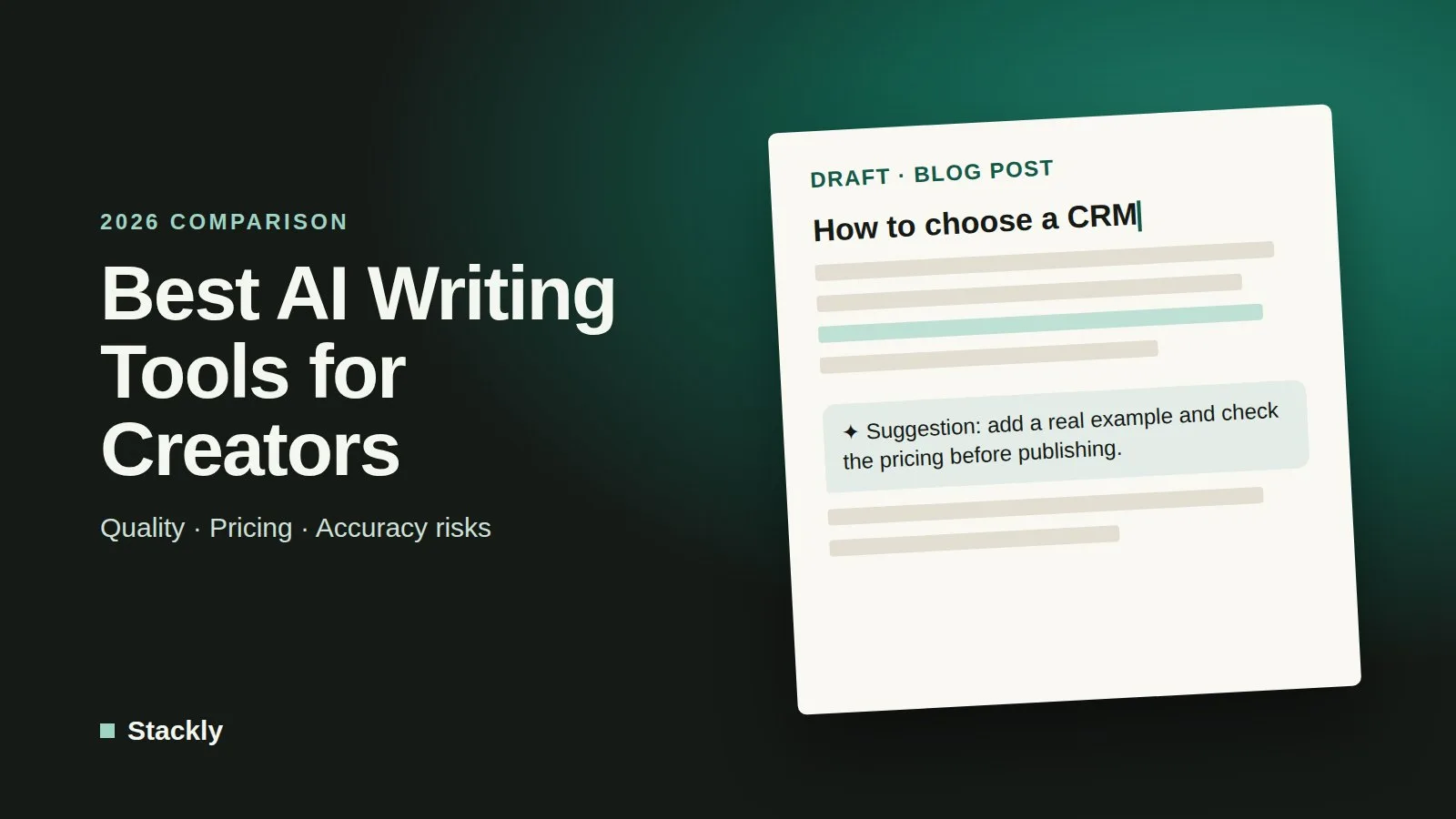
A good AI writing assistant can turn a blank page into a workable first draft in minutes, but the tools on the market in 2026 are far from interchangeable. Some are general-purpose assistants that can help with almost anything, others are built specifically for marketing copy or search-optimized blog posts, and a few focus purely on polishing what you have already written. This guide compares the main types of AI writing tools on output quality, pricing, and the jobs they handle best, including blogging, SEO, and social media, and it is honest about their limits on accuracy and originality so you can decide where AI fits into your workflow and where a human still needs to stay in charge.
The Main Types of AI Writing Tools
Before comparing individual products, it helps to understand that “AI writing tool” covers several different categories. Most of them run on the same families of large language models, so the real differences come from the interface, the templates, the integrations, and how much control you have over the output.
General-purpose AI assistants: Chat-based tools such as ChatGPT, Claude, Gemini, and Microsoft Copilot. You describe what you want in plain language and refine the result through conversation. They are the most flexible option and handle everything from blog outlines to email replies.
Marketing copy platforms: Tools such as Jasper and Copy.ai wrap language models in templates for ads, product descriptions, landing pages, and campaigns. They often add brand-voice settings and team workflows.
SEO content tools: Platforms such as Surfer and Frase analyze the pages that already rank for a keyword and suggest topics, headings, and terms to cover. Many now include an AI drafting feature on top of their research data.
Editing and rewriting assistants: Tools such as Grammarly and ProWritingAid focus on grammar, clarity, tone, and concision. They are less about generating content from scratch and more about improving your own writing.
Many small businesses end up using two of these together, for example a general-purpose assistant for drafting and an editing assistant for the final pass.
Output Quality: What Separates Good From Generic
The biggest complaint about AI-written content is that it sounds like AI: vague, repetitive, and padded with phrases that say little. Output quality depends partly on the underlying model and partly on how the tool lets you guide it.
The leading general-purpose assistants produce the most natural, coherent long-form text in 2026. They follow detailed instructions well, can adapt to a sample of your writing, and handle complex topics with reasonable structure. Their weakness is that, left to their defaults, they drift toward a safe, generic style. The quality of your prompt matters enormously: a request that includes your audience, your angle, examples, and what to avoid will produce a far better draft than “write a blog post about accounting software.”
Marketing platforms trade some flexibility for consistency. Their templates are useful when you need fifty product descriptions in the same format, and brand-voice features help keep tone uniform across a team. For original, opinionated articles, however, they rarely beat a well-prompted general assistant.
SEO tools produce drafts that cover a topic thoroughly, because they are built around what already ranks. The risk is sameness: if every writer follows the same term list, the content converges on what already exists instead of adding something new. Google’s own guidance on AI content is that it rewards helpful, original material however it is produced, so thorough coverage alone is not enough.
A practical test for any tool is to give it the same brief, ideally a topic you know well, and compare the drafts on accuracy, structure, and how much editing each one needs before you would publish it.
Pricing: What You Actually Pay
AI writing tools generally follow three pricing models, and the headline number rarely tells the full story.
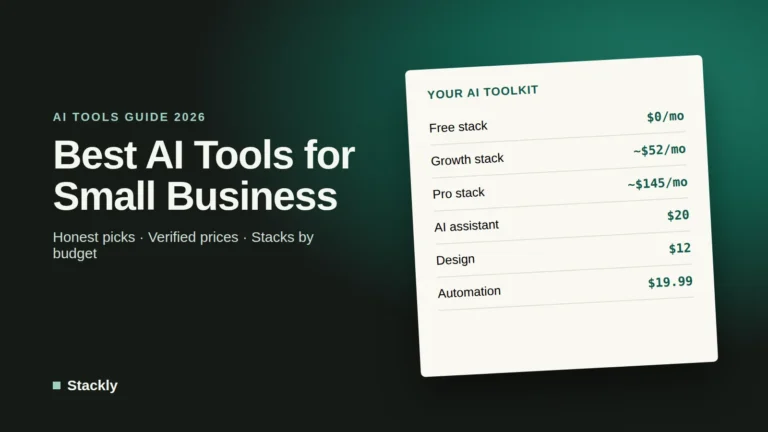
General-purpose assistants usually offer a free tier with limits on usage or access to the most capable models, plus an individual paid plan that has settled at roughly $20 per month across the major providers, with team and business plans costing more per user. For most freelancers and small businesses, one paid general assistant is the best value per dollar because it covers so many tasks. If you also want to automate repetitive work beyond writing, see our guide to AI productivity apps.
Marketing copy platforms and SEO content tools are typically more expensive, often priced per seat or by the number of articles, keyword analyses, or words you can generate each month. Entry plans can look affordable, but credit limits and feature gates mean costs rise quickly as volume grows. Always check whether features you need, such as brand voice, team collaboration, or integrations, are included in the plan you are considering.
Editing assistants sit in between, with capable free versions and premium plans that add tone suggestions, full-sentence rewrites, and plagiarism checks.
Prices change frequently, so treat any figure as a starting point and confirm on each vendor’s pricing page. Before committing to an annual plan, use the free tier or trial to test real tasks from your own workload. If you are building out your wider software stack, our guides to email marketing tools and accounting software cover the same trade-offs for those categories.
Best Use Cases: Blogging, SEO, and Social Media
Different tasks call for different tools. Here is how the categories map to the jobs small businesses and creators most often need done.
Blog posts and long-form guides: A general-purpose assistant is the strongest choice for outlining, drafting sections, and rewriting awkward passages. Pair it with your own expertise, examples, and opinions; that is what makes an article worth reading and ranking.
SEO research and optimization: SEO content tools are most useful before and after drafting, to see which subtopics searchers expect and to check that your draft covers them. Use them as a checklist, not as the author.
Social media posts: General assistants and marketing platforms both handle short-form content well, especially repurposing a blog post into several posts for different networks. Always adjust the result to fit the platform’s style and your brand voice.
Email newsletters and sequences: AI is effective for subject line variations, first drafts, and summaries of longer content. Keep the final voice personal, since subscribers notice generic messages.
Product and service descriptions: Marketing template tools shine when you need many descriptions in a consistent format. Feed them accurate specifications so they do not invent features.
Editing and proofreading: Editing assistants catch errors, tighten wordy sentences, and flag tone problems in text you wrote yourself, which is often the safest and most valuable use of AI.
For your website itself, the platform you publish on matters too. If you are still choosing one, our comparison of website builders vs WordPress explains how each handles blogging and SEO.
Limitations: Accuracy, Originality, and Ownership
AI writing tools are impressive, but they have limits that every business owner should understand before publishing anything under their name.
Accuracy and Invented Facts
Language models generate text that sounds plausible, not text that is guaranteed to be true. They can state incorrect statistics, misdescribe product features, or invent sources that do not exist, a problem often called hallucination. Tools with web search reduce the risk but do not eliminate it. Every number, quote, price, and claim in an AI draft needs to be checked against a reliable source before it goes live. This matters even more for topics involving money, health, legal requirements, or security.
Originality and Sameness
Because models learn patterns from existing text, their default output tends to repeat common ideas in common phrasing. Direct copying of long passages is uncommon, but the bigger risk is content that adds nothing new. Readers and search engines both favor first-hand experience, original data, specific examples, and clear opinions. Use AI to speed up structure and drafting, then add the parts only you can provide.
Copyright and Ownership
The legal position on AI-generated text is still developing. In the United States, the Copyright Office’s guidance on artificial intelligence indicates that material generated entirely by AI, without meaningful human authorship, may not be protected by copyright. Substantial human selection, editing, and creative input strengthen your position. Check each tool’s terms of service for how it handles ownership of outputs and whether your inputs may be used for training, especially if you paste in client or confidential information.
Disclosure and Trust
Search engines do not penalize content simply for being AI-assisted; Google’s guidance on AI-generated content focuses on whether content is helpful and reliable, and warns against using automation mainly to manipulate rankings. Mass-producing thin articles is the real risk. Some businesses also choose to tell readers when AI assisted with a piece, which can build trust, particularly for reviews and advice.
How to Choose the Right AI Writing Tool
Start with the work you actually do each week rather than the longest feature list. A simple way to decide:
If you write a variety of content and want one tool, start with a paid general-purpose assistant.
If you produce high volumes of short marketing copy in a fixed format, consider a marketing template platform.
If organic search is your main growth channel, add an SEO content tool for research and optimization.
If you already write well and want cleaner, more confident prose, an editing assistant may be all you need.
Whatever you choose, build a simple workflow: brief the tool clearly, generate an outline, draft section by section, fact-check, add your own experience and examples, and edit for voice. Keep your accounts secure as well, since these tools often hold drafts and client material; our security checklist for small business owners covers the basics like multi-factor authentication.
Can Google tell if content was written by AI, and will it hurt my rankings?
Google has said it focuses on the quality and helpfulness of content rather than how it was produced. AI-assisted articles can rank well if they are accurate, original, and genuinely useful. Publishing large volumes of low-value AI content mainly to game search results is what puts rankings at risk.
Which AI writing tool is best for beginners?
For most beginners, a general-purpose assistant is the easiest starting point because you simply describe what you want in plain language. Its free tier is enough to learn how to write good prompts before deciding whether a paid plan or a specialist tool is worth it.
Is AI-generated content plagiarism?
AI tools rarely copy long passages word for word, but they can reproduce common phrasing and ideas, and occasionally output text very close to existing sources. Running important pieces through a plagiarism checker and rewriting drafts in your own words is a sensible precaution.
Do I own the content an AI tool writes for me?
Most major tools assign rights in the output to the user under their terms, but copyright protection for purely AI-generated material is uncertain in many countries. Adding substantial human editing and original contributions strengthens your claim to the finished work.
How much should a small business spend on AI writing tools?
Many small businesses do well with a single general-purpose assistant at around $20 per month, plus a free editing tool. Specialist SEO or marketing platforms make sense once content is a significant part of your marketing and the time saved clearly outweighs the extra cost.
The Bottom Line
AI writing tools are best treated as a fast, capable assistant rather than an autopilot. Pick one tool that matches your most frequent writing task, learn to brief it well, and keep a human in charge of facts, originality, and voice. That combination gives you the speed of AI without sacrificing the trust that makes readers, and search engines, come back.
Leave a Reply